If you’ve started researching ways to cut energy costs for your home or building, you’ve likely come across the term “energy audit,” but not all energy audits are created equal. The industry standard, established by ASHRAE (the American Society of Heating, Refrigerating and Air-Conditioning Engineers), defines three types of energy audits, each offering a different level of depth, cost, and detail. Understanding these energy audit levels helps you choose the right starting point for your specific goals, whether you’re a homeowner curious about efficiency improvements or a business evaluating a major capital investment.
Understanding the ASHRAE Energy Audit Standards
The ASHRAE energy audit standards provide a widely recognized framework used across the energy auditing industry, organizing audits into three progressively detailed levels: Level 1, Level 2, and Level 3. Each level builds on the previous one, offering deeper analysis, more precise data, and correspondingly higher cost. This standardized approach helps ensure consistency across the industry, giving building owners a reliable way to compare audit scope and depth regardless of which auditor or company they work with.
Level 1 Energy Audit: The Walk-Through Assessment
A Level 1 vs Level 2 vs Level 3 energy audit comparison typically starts with Level 1, often referred to as a walk-through energy assessment. This is the most basic and least expensive audit type, involving a visual inspection of the building along with a review of utility bills to identify obvious areas of energy waste and inefficiency.
A Level 1 audit typically includes:
- A visual walk-through of the building, noting obvious issues like inadequate insulation, air leaks, or outdated equipment
- Analysis of historical utility bills to understand overall energy consumption patterns
- General recommendations for low-cost or no-cost energy-saving measures
- A rough estimate of potential savings from identified opportunities
This level works well as a starting point for homeowners or building owners wanting a general sense of where energy is being wasted, without committing to the cost and complexity of a more detailed assessment.
Level 2 Energy Audit: The Detailed Survey and Analysis
Moving up in depth, a Level 2 audit, sometimes called an energy survey and analysis, provides considerably more detailed data collection and analysis than the walk-through approach used in Level 1.
A Level 2 audit typically includes:
- More detailed data collection, including specific measurements of building systems and equipment
- A breakdown of energy use by system (heating, cooling, lighting, and other major energy consumers)
- Specific, quantified recommendations for energy efficiency improvements, including estimated costs and payback periods for each measure
- Consideration of interactions between different building systems, rather than evaluating each in isolation
This level is often the right fit for building owners who want more than general recommendations: genuine data-driven findings with specific projected costs and returns for individual improvement measures, allowing for more informed decision-making about which upgrades to prioritize.
Level 3 Energy Audit: The Investment-Grade Audit
The most comprehensive option, a Level 3 audit, is often referred to as an investment-grade energy audit, reflecting its purpose: providing the detailed, reliable financial analysis needed to support major capital investment decisions.
A Level 3 audit typically includes:
- Extensive data collection and sometimes continuous monitoring of building systems over time
- Detailed engineering analysis and, in many cases, energy modeling software to simulate proposed improvements
- Highly precise cost estimates and payback calculations suitable for securing financing or board-level capital approval
- Detailed implementation plans for recommended capital-intensive projects
Because of the depth of analysis involved, Level 3 audits represent the highest cost and time investment among the three levels, but they’re specifically designed for situations where significant capital will be committed based on the audit’s findings, making the additional precision and reliability worth the investment.
Comparing Energy Audit Cost by Type
Energy audit cost by type generally scales with the depth of analysis involved. Level 1 walk-through assessments are the most affordable and quickest to complete; Level 2 audits involve a moderate increase in both cost and time given the more detailed data collection and analysis, and Level 3 investment-grade audits represent the most significant investment, reflecting the extensive engineering analysis and precision required to support major capital decisions. Choosing the appropriate level for your actual goals rather than automatically defaulting to the most comprehensive option helps ensure you’re getting proportionate value for your investment.
Tools and Techniques Used Across Energy Audits
Blower Door Test Energy Audit
A blower door test energy audit technique is commonly used, particularly in Level 2 and Level 3 audits, to measure a building’s overall air leakage. This test involves installing a specialized fan in an exterior doorway to depressurize the building, allowing auditors to measure how much outside air infiltrates through gaps, cracks, and other unsealed areas, providing concrete data on air sealing opportunities rather than relying on visual inspection alone.
Thermal Imaging Energy Audit
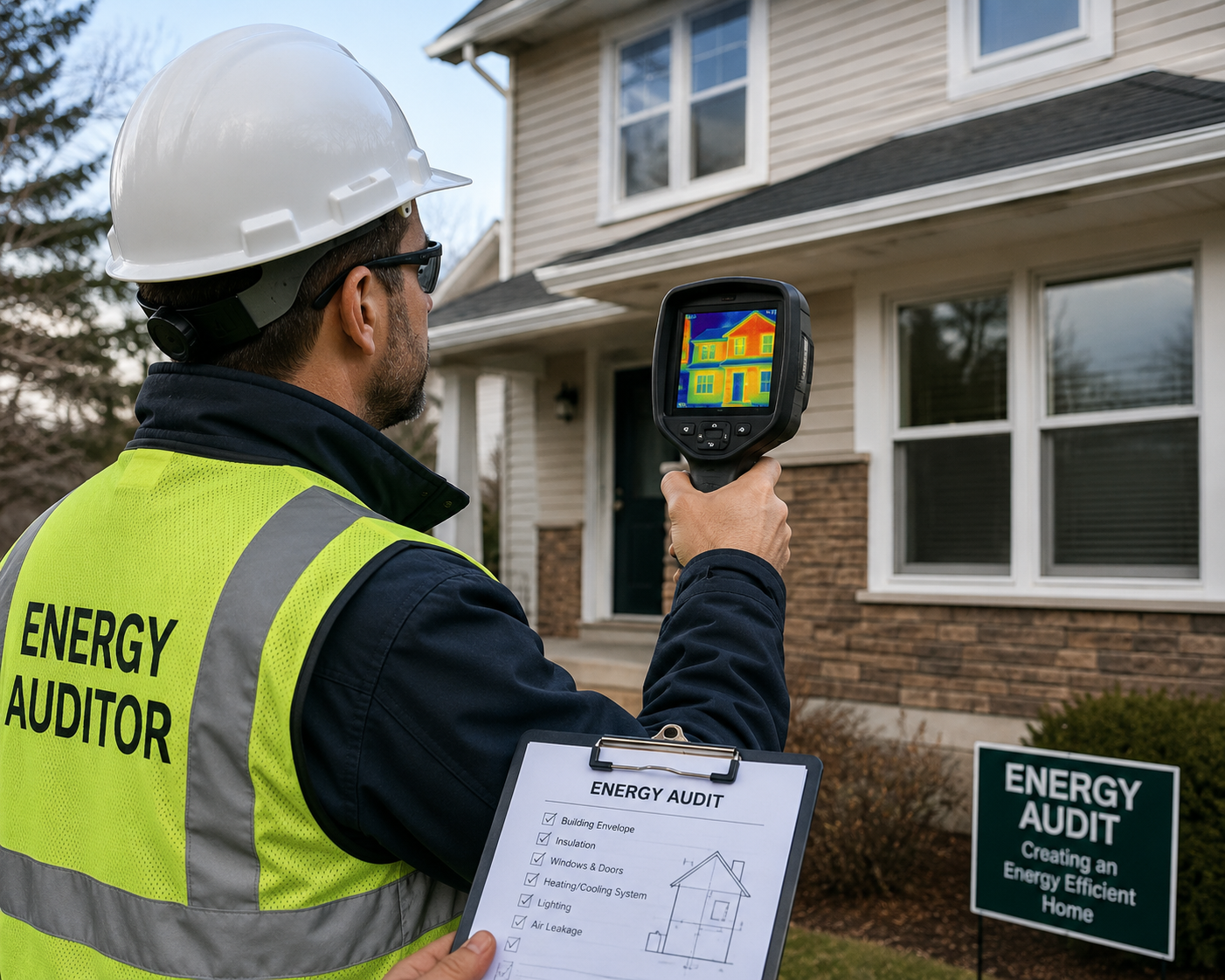
Thermal imaging energy audit techniques use infrared cameras to visualize temperature variations across walls, ceilings, and other building surfaces, revealing insulation gaps, air leaks, and moisture issues that aren’t visible to the naked eye. This technology has become a standard tool in more detailed Level 2 and Level 3 audits, offering visual, data-backed evidence of specific problem areas that might otherwise go undetected.
Home Energy Audit Types vs Commercial Energy Audit Types
While the same three-level framework applies across both residential and commercial contexts, home energy audit types and commercial energy audit types differ somewhat in typical scope and focus. Residential energy audits often emphasize insulation, air sealing, and HVAC system efficiency relevant to typical household energy use, while commercial energy audits frequently need to account for more complex building systems, occupancy patterns, and specialized equipment specific to the building’s use, whether that’s an office, retail space, or industrial facility.
The Residential Energy Audit Process
Understanding the general residential energy audit process helps homeowners know what to expect:
- Initial consultation: Discussing your goals and any specific concerns, like high utility bills or uncomfortable rooms.
- On-site assessment: Conducting the walk-through, data collection, and any testing (like a blower door test) appropriate to the audit level.
- Data analysis: Reviewing collected data alongside utility bill history to identify inefficiencies and improvement opportunities.
- Energy audit report findings: Compiling recommendations, prioritized by cost-effectiveness and potential impact.
- Follow-up consultation: Reviewing findings with the homeowner and discussing next steps for implementing recommended improvements.
Understanding Your Energy Audit Report Findings
A thorough energy audit report findings document should present recommendations in a clear, prioritized format, typically organized by cost, potential savings, and payback period, so building owners can make informed decisions about which improvements to pursue first. A quality report goes beyond a simple checklist, providing enough context and data to genuinely support decision-making rather than a vague list of generic suggestions.
Energy Audit vs Energy Assessment
The terms energy audit vs energy assessment are sometimes used interchangeably, though “assessment” is occasionally used to describe a less formal or lower-level evaluation, similar to a Level 1 walk-through. In practice, terminology can vary somewhat between companies and regions, so it’s worth clarifying exactly what level of analysis a specific “audit” or “assessment” actually includes, rather than assuming based on terminology alone.
Energy Audit Certification
When selecting an auditor, confirming their energy audit certification credentials matters for ensuring you receive a genuinely qualified, reliable assessment. Various industry certifications exist for energy auditors, and companies performing more detailed Level 2 or Level 3 audits should employ certified professionals with demonstrated expertise in building science and energy analysis, particularly for audits intended to support significant capital investment decisions.
Building Energy Audit Checklist
A general building energy audit checklist for building owners preparing for an audit includes:
- Gathering at least 12 months of utility bills, ideally longer, for accurate baseline analysis
- Noting any specific comfort issues, like drafty rooms or inconsistent temperatures
- Making note of the age and condition of major systems like HVAC, water heating, and insulation
- Clarifying your specific goals: general efficiency improvement, addressing comfort issues, or evaluating a major capital project
When to Get an Energy Audit
Understanding when to get an energy audit helps building owners choose the right timing and level for their situation:
- A Level 1 audit makes sense as a general starting point, particularly for homeowners simply curious about efficiency opportunities without a specific major project in mind
- A Level 2 audit fits well when you’re seriously considering specific efficiency improvements and want detailed cost and savings data to guide decision-making
- A Level 3 audit is appropriate when significant capital investment is being considered, particularly for commercial buildings, and stakeholders need investment-grade financial analysis to support the decision
Final Thoughts
Understanding the three levels of energy audits, from a basic Level 1 walk-through to a comprehensive Level 3 investment-grade analysis, helps you choose the right starting point based on your specific goals, budget, and the scale of potential improvements you’re considering. Whether you’re a homeowner curious about reducing utility costs or a business evaluating a significant capital project, matching the audit level to your actual needs ensures you get genuine, proportionate value from the process. If you’re ready to better understand your building’s energy performance, reach out to a trusted local energy audit professional today to discuss which audit level fits your specific situation.
Frequently Asked Questions
What’s the difference between a Level 1 and Level 2 energy audit? A Level 1 audit is a basic walk-through assessment with general recommendations, while a Level 2 audit involves more detailed data collection and provides specific, quantified savings and cost estimates for individual improvement measures.
Do I need a Level 3 audit for my home? Generally, no. Level 3 investment-grade audits are typically reserved for major commercial capital projects requiring precise financial analysis, while most homeowners find a Level 1 or Level 2 audit sufficient for their needs.
What is a blower door test, and why is it used in energy audits? A blower door test measures a building’s overall air leakage by depressurizing it with a specialized fan, providing concrete data on air sealing opportunities that visual inspection alone can’t capture.
How much does an energy audit typically cost? Cost scales with audit depth. Level 1 walk-throughs are the most affordable, Level 2 audits involve a moderate cost increase, and Level 3 investment-grade audits represent the most significant investment given their extensive analysis.
Is a home energy audit different from a commercial energy audit? Both follow the same general three-level framework, but residential audits typically focus on insulation, air sealing, and HVAC efficiency, while commercial audits often need to account for more complex building systems and occupancy patterns.